
Feline Union · Evening scheduleNarrated · free
The
Unchosen
When everything is chosen for you, what happens to what you never knew to choose?
Turn the dialWho chooses what reaches you
Radio960
- What it compressed
- A whole record library, reduced to the next three minutes.
- Who selected it
- A programmer, and sometimes a caller, for everyone listening at once.
- What discovery was left
- Every song between you and the one you were waiting for.
One choice, heard by everyone tuned in at the same moment.
Who is talking
- The programmerleftRan a station's evening schedule for thirty years. Proud of it, and knows who it left out.
- The feedleftA recommendation system. Polite, tireless, and scored on whether you keep watching.
- The callerrightUsed to phone in requests late at night. Now has every song ever recorded, and nobody to hear them with.
- The recordrightReads the evidence into the conversation, and stops the others when they claim too much.
7:05 PMCH 01
We never had so much to choose
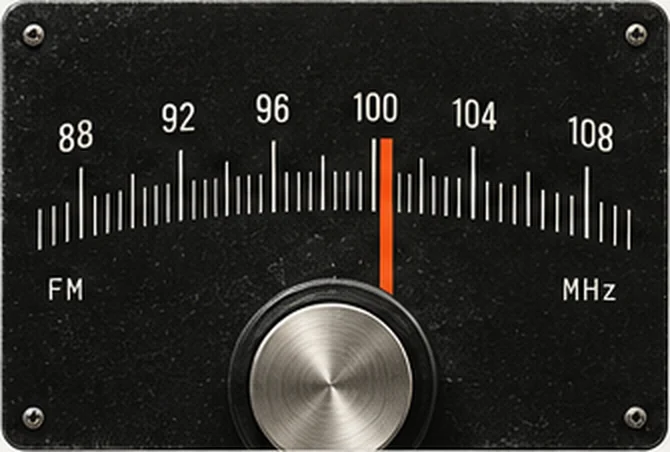
We have never had so much to watch, hear, read and choose. Yet the machinery that delivers culture increasingly shows us what it predicts we already want.
The shared radio, the scheduled movie and the single household television did not just disappear in an upgrade. Their loss changed the social conditions of discovery.
When you waited for a song, you heard someone else's song. When you turned on the movie of the day, you met stories you had not selected. When a household shared one screen, people negotiated whose interests would win, and sometimes found out they liked the thing they had resisted.
Today the waiting is gone. So, more and more, is the encounter nobody asked for.
We confused freedom from other people's choices with freedom itself.
7:30 PMCH 02
Books compress time. Films select from the compression.
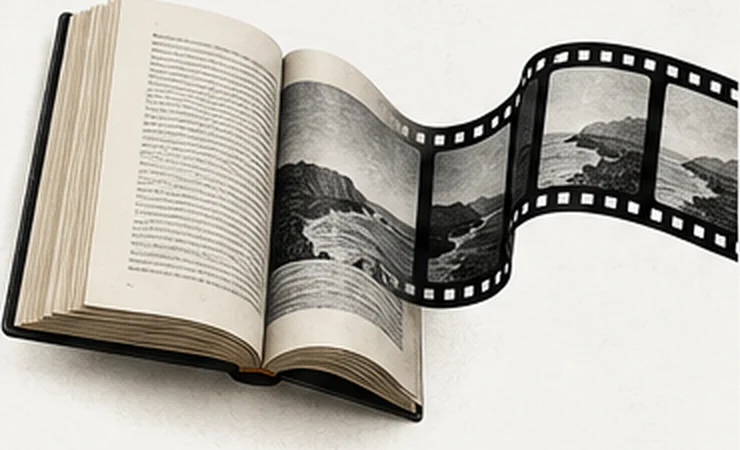
A book can press decades of observation, years of investigation or centuries of accumulated knowledge into an object someone reads in hours. Writing selects and preserves experience. Reading rebuilds it in another mind. Information transferred is not wisdom acquired: the reader still has to interpret it, test it and make it their own.
Books compress time. Minds decompress civilisation.
Film compresses again. It selects scenes, faces, conflicts, gestures and sounds so that an experience fits a running time. Every cut is an editorial decision, and every frame excludes what lies outside it. A film may come from a book, from a life or from an original screenplay; the point is the layers of selection, not the source.
So the question about any medium is not only what it shows. It is what its selection makes invisible, and who did the selecting.
8:00 PMCH 03
Broadcasting selected for a public
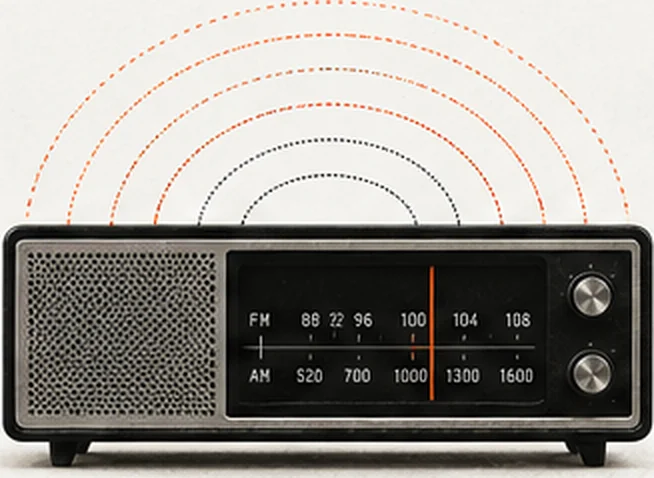
Radio and television added a further layer: the schedule. A programmer decided what would enter millions of homes, and when.
That system had powerful gatekeepers, commercial incentives, censorship and exclusions. It was not a golden age of democratic culture. Whole languages, communities and points of view could not get on air at all.
But it had a side effect that nobody designed: the audience regularly met material it had not personally requested. The western after the news. The black-and-white film on a rainy afternoon. A jazz record between two familiar songs. A documentary someone fell into while waiting for a comedy.
Canada went further and wrote the unrequested encounter into law. Since 1971 Canadian radio stations have been required to play a fixed share of Canadian music, whether or not a given listener asked for it. A whole generation of Canadian artists reached listeners who had never chosen them.
Some of the most consequential discoveries were unplanned.
8:30 PMCH 04
The request line: one choice, thousands of discoveries
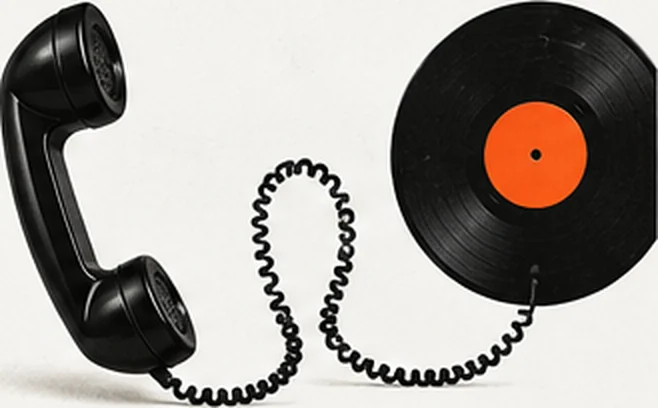
A listener called the station to request a song. Thousands of other listeners heard that choice. The request was personal; its exposure was collective.
One person's curiosity could interrupt everybody else's habits. The audience could dislike it, argue about it, remember it, or discover a genre it had never heard.
Call the station
Pick a song to request, then call it in. Each square is a home with the radio on.
Your request
On one station, a single request goes to every radio tuned in.
A model of the structure, not a measurement of any real audience.
The choice of one became the discovery of many.
9:00 PMCH 05
Waiting was doing cultural work

Waiting for your favourite song meant listening to other songs. Waiting for a particular programme meant seeing what surrounded it. Sharing one screen meant bargaining, taking turns and sometimes giving way.
Those constraints were frustrating. They also produced routine encounters with other people's tastes. The point is not to romanticise scarcity. It is to notice what scarcity was doing before it was removed.
Wait for your song
Choose the song you want to hear. The radio will get to it. On demand, nothing stands in the way.
Your song
Every song in the queue is real. None of them plays here: look them up afterwards, if any of them stopped you.
Technology eliminated the wait without deliberately preserving what the wait had taught us.
9:30 PMCH 06
On demand, and then the enclosure
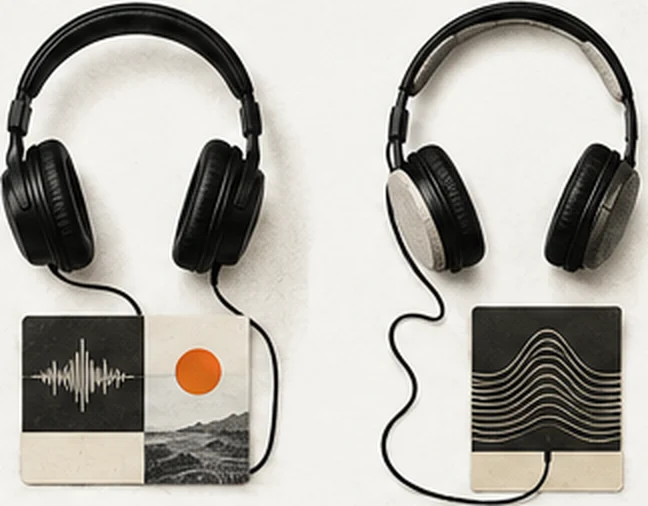
On-demand platforms made an extraordinary amount of culture reachable. A listener can find music from another continent. A viewer can find an obscure film no local broadcaster would ever have aired. Access and exposure are not the same thing.
Search needs a question: a title, a clue, an impulse. Recommendation starts from a profile inferred from what you did before. And on the largest platforms, recommendation is now most of what people watch.
Each person receives a different sequence of suggestions. The system measures engagement and uses it to shape what comes next. What feels like free choice happens inside a field of options someone else arranged.
Consumption is individualised while the infrastructure of selection is concentrated.
Steer a feed
Twelve regions of music on a ring. Pick something to start, then pick from what the feed offers, ten times. Each offer comes mostly from next door to your last pick.
A toy model of a feedback loop. It shows the mechanism, not the ranking of any real platform.
The research does not say that every recommender builds an echo chamber. It says something more specific, and more useful.
The risk was never that discovery became impossible. It is that discovery outside your existing taste stopped being automatic, and became something you have to ask for, on a system that is rewarded when you do not.
10:00 PMCH 07
The loss of cultural negotiation
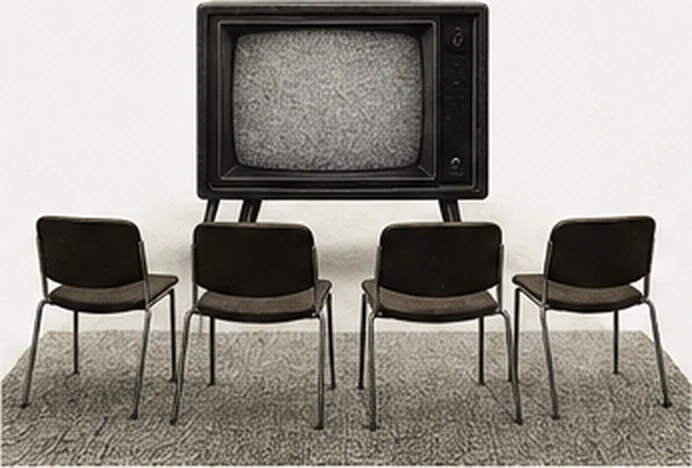
A household with one television had to decide together. The family radio and the record player created arguments, compromises and turns.
Now people can sit in the same room while receiving separate streams through separate headphones. That is a real gain in privacy and freedom. It also removes an everyday occasion to sit through someone else's preference.
One screen, four people
Three hours tonight. With one television, tap who gets to choose each hour. Then hand everyone their own screen.
Physical proximity no longer guarantees cultural participation.
10:30 PMCH 08
Choosing from a menu is not choosing the menu
Individual agency is the ability to judge independently, to challenge the options on offer, and to take part in shaping shared conditions. Consumer individualism is the ability to select from a menu. They are not the same freedom.
A system can offer millions of personalised selections while giving its users no say over the ranking rules, the business incentives, the data collected or the cultural visibility that shape the menu.
Choosing what to consume is not the same as choosing how culture is organised.
Some governments have started to treat the menu itself as public business. Europe now requires the largest platforms to offer a feed that is not built from your profile. Canada has extended its broadcasting law to streaming services, including the question of what they make easy to find.
Broadcasting could impose a narrow national story. Personalised platforms can split that story into countless private streams. Neither condition guarantees a democracy. What matters is whether a society has institutions that expose people to difference while letting them argue, decide and make things together.
11:00 PMCH 09
What we know together
The danger is not that each person knows less. People can be deeply informed about their own subjects while sharing fewer reference points with anyone else.
A public can become highly specialised and still lose the ability to recognise shared problems, argue from common evidence or act together. The deficit is relational: not only what I know, but what we know together, and what we know about what each other knows.
The record does not show a public split into sealed tribes. It shows something narrower: people still sample the same places, but less and less at the same hour, and the knowledge that everyone else saw it too is what the schedule made and the feed does not.
A child who grows up with a broadcast schedule meets a different default culture from one who grows up with a searchable library and a personal feed. That does not mean every young person watches only franchises, or that older generations had broad taste: broadcasting repeated its dominant genres and shut out many voices.
The generational question is narrower and more important. What unrequested encounters are built into the ordinary media of childhood? How often does someone else's taste interrupt yours? How often does a stranger's request become your discovery? How often does entertainment require a compromise with the person beside you?
11:30 PMCH 10
What must be rebuilt
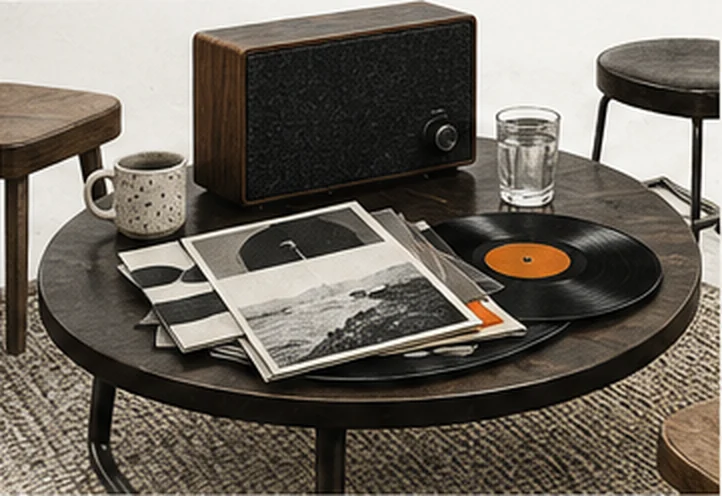
The answer is not to abolish personal choice or restore the broadcast monopolies. The legal scholar Cass Sunstein argued two decades ago that a free society needs unchosen, unanticipated encounters and a range of shared experiences [1]. Those can be designed on purpose:
- Public playlists and shared listening sessions where people take turns choosing.
- Film clubs and community screenings that programme beyond the audience's existing taste.
- Human-curated channels that deliberately cross genres, languages, periods and regions.
- Recommendation controls that let anyone ask for surprise, disagreement, unfamiliarity and distance.
- Schools, libraries and public institutions that build encounters across generations.
- Shared rituals where people talk about what they had never considered choosing.
The other person's choice
Tell it what you normally reach for, if you like. It will hand you something someone else chose, from somewhere you were not looking. Nothing about you is kept.
I usually reach for
Mostly from
Fifty choices, each made by a person on our cast and explained in their words. No ranking, no profile, no history.
Discovery must become a public good, not a prediction of private preference.
12:00 AMCH 11
Sign-off
We have never had so much individual choice, yet so much of what we meet is organised by so few institutions.
We used to wait for what we loved and discover what we didn't know. Now we can get what we love immediately and may never meet what we don't know.
The choice of one used to become the discovery of many. Now the choices of millions can be separated into millions of private streams.
The problem was never that other people chose some of what we heard. The problem is who controls the selection, and whether the public has any say in it.
We should not have to give up personal freedom to rediscover shared culture. Nor should we confuse the ability to avoid everyone else's preferences with independence of mind. A civilisation is not a collection of people making separate selections. It is also what they build, contest and remember together.
The future of discovery must include the unchosen.
Pass it on
Ten cards. Pick one and post it; each opens as its own preview and leads back here.